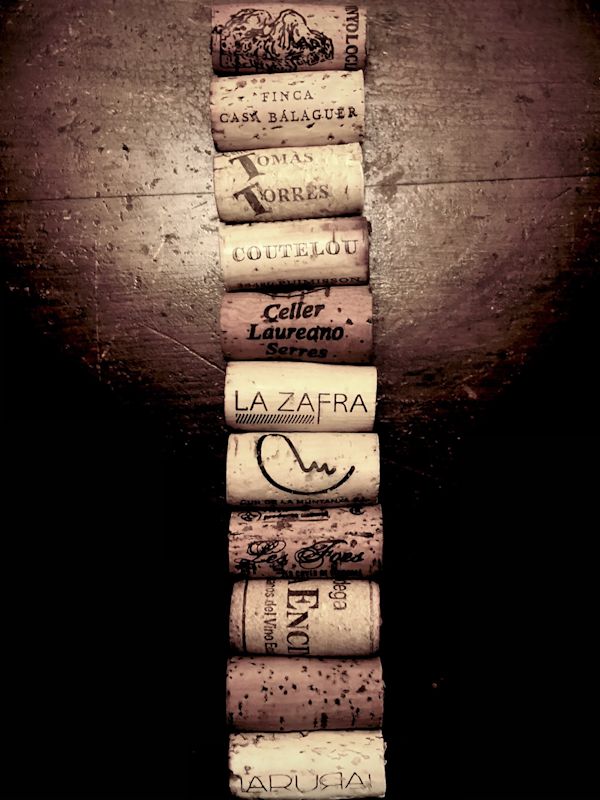
Since 8 December 2023, new European regulations on wine bottle labelling have come into force. This change aims to bring greater transparency by detailing all ingredients present in a bottle of wine and their nutritional values. Until now, wine had been an exception to legislation, sometimes omitting even the production region and the grape variety, which were the exclusive domain of designations of origin.
From now on, every wine label must include two essential elements:
- The list of ingredients: this includes not only the grapes, but also all additives and technological processing aids used during winemaking.
- The nutritional declaration: this includes the energy value of the wine in table form, expressed in kilojoules and kilocalories per 100 ml.
Without going into controversy, it is important to know that the majority of industrial wines contain additives:
- Fining agents: these may be of animal origin, such as egg albumin, casein or gelatin. Mineral alternatives such as bentonite (a clay) are also used.
- Acidifiers: to adjust the wine's acidity, acids such as tartaric, malic or lactic acid may be added.
- Added tannins: to reinforce the wine's structure.
- Wood chips: to imitate oak barrel ageing.
- Selected yeasts: to improve fermentation or direct aromas.
- Preservatives: sulfur dioxide (SO₂), as well as potassium sorbate, bisulfite and metabisulfite.
- Gases: argon, nitrogen, carbon dioxide for bottling.
Some components are not considered additives and do not need to be listed among the ingredients, particularly technological processing aids eliminated during winemaking.
With this new regulation, consumers finally have access to minimal information about what is, or is not, in their bottle. For natural wine producers, it is a blessing: their additive-free wines have nothing to hide.